KOD Season 1
Twelve mics, one throne, and a man who judges bars like a poet grading scripture.

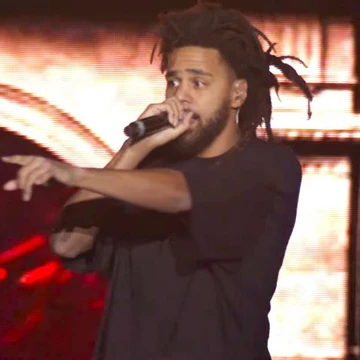
KOD Season 1 is the inaugural run of King of the Dot, the hip-hop battle competition series that debuted on BET in 2012 and placed J. Cole squarely at the center of the culture as host, judge, and cultural gatekeeper. Rather than simply performing his own material, Cole stepped into the role of curator and evaluator, breaking down competitors' bars, flow, and storytelling with the critical eye of a fellow artist who has lived the struggle. For fans, Season 1 matters because it crystallized Cole's identity beyond the recording studio. It was the season that showed the world he wasn't just a rapper making records—he was a steward of the art form, willing to hand a mic to unknowns, demand excellence, and celebrate the craft of live battle rap in a way that felt both intimate and electric.
- Format
- Hip-hop battle competition (12 contestants eliminated through head-to-head rounds)
- Network
- BET
- Premiere year
- 2012
- Host / Judge
- J. Cole
- Role in Cole's career
- First major hosting and judging commitment, expanding his presence beyond recorded music
- Cultural function
- Platform for emerging battle rappers to showcase live lyrical craft
Lore & Background
King of the Dot was built on a simple, brutal premise: strip away the studio, the autotune, the producer's safety net, and let the words do the work. Season 1 dropped twelve rappers into a gauntlet where every bar was dissected in real time, and J. Cole sat at the head of the table not as a celebrity endorser but as a peer who had bled for the same syllables. His critiques were surgical—praising a clever internal rhyme, calling out a lazy punchline, and reminding the room that hip-hop is as much about architecture as it is about aggression. What made the season resonate was Cole's dual posture. He was the judge who could send a competitor home, but he was also the guy who'd pull someone aside and say, 'You had something there, you just need to trust your own voice.' That mentorship energy threaded through every episode and gave the show a warmth that pure competition formats rarely achieve. The audience watched not just for spectacle but for the moment a young rapper realized someone with real credibility was genuinely listening. Season 1 also anchored KOD in the broader BET programming identity, giving the network a flagship that celebrated Black musical artistry in its rawest, most unfiltered form. It became a weekly ritual for a generation that grew up on mixtapes and open-mic nights, suddenly seeing that world broadcast with the same production value as any scripted series.
In Their Own Story
The studio lights hum to life. Twelve chairs in a semicircle, each one a small kingdom of nervous energy. Cole adjusts his mic, leans forward, and the room goes quiet in that way only a genuine artist can command—not with volume, but with the weight of someone who's stood in the same spot, voice cracking, hoping the next bar saves him. He looks at the first competitor and says, simply, 'Give me something I haven't heard.' The beat drops. The crowd leans in. For the next three minutes, the only thing that exists is a voice, a rhythm, and the terrifying, beautiful act of being judged by someone who loves the craft more than the competition.
Reader's Guide
Picture it like this: 2012, and the hip-hop world is mid-transformation. Streaming is eating radio. The mixtape era is fading. And into that moment walks J. Cole, not with a new album, but with a gavel. KOD Season 1 is his declaration that the art form still lives in the room, in the breath between bars, in the spit of a delivery that hits like a fist through glass. The energy in those early episodes is almost feral. Competitors are raw, unpolished, some of them still figuring out their own voice. Cole doesn't coddle. He breaks a verse apart like a mechanic opening an engine, pointing to the part that's misfiring. But then—and this is the beat that made fans lose their minds—he'll pause, look the competitor dead in the eye, and say something that reframes their entire approach. The crowd erupts. Not because he's being kind, but because he's being *real*. What made Season 1 matter culturally wasn't just the battles. It was the proof that a major artist could sit in judgment without becoming a gatekeeper. Cole treated every competitor like a fellow student in the same classroom, and that posture gave the show a moral center that pure competition shows rarely have. For the fans watching from their apartments, it felt like getting front-row seats to a masterclass that also happened to be a fight club. The season cemented Cole's second act: not just the man making records, but the man keeping the flame lit for the next generation. And every time a competitor walked off that stage with a new idea for their flow, you could see the ripple already spreading.
Did You Know?
- KOD was designed to highlight live, unproduced lyrical skill, deliberately stripping away the studio effects that had come to dominate mainstream hip-hop releases by the early 2010s.
- Cole's judging style on the show was noted for its specificity—he'd reference exact bars, rhyme schemes, and delivery choices rather than offering generic praise, which competitors and fans alike found refreshing.
- The show gave a national television platform to battle rappers who might otherwise have been limited to local open-mic scenes and underground cyphers, effectively bridging the underground and mainstream hip-hop worlds.
- Cole has spoken in interviews about how hosting KOD reinforced his belief in hip-hop as a craft that requires daily practice, treating the show almost like a coaching clinic disguised as a competition.
More in Tours & Timeline
Elsewhere in the J Cole universe
Spotted an error? Know more?
This is a living reference — every entry is fact-audited, and reader corrections feed straight into our audit queue. Suggest an edit · See this site's audit record