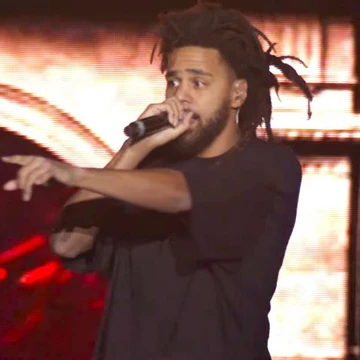
KOD Season 2
The crown gets heavier, the Dot gets louder—Season 2 is where the competition found its spine.

KOD Season 2 is the second season of King of the Dot, the hip-hop competition series created and hosted by J. Cole. Airing in 2013 on BET, the season continued the tradition of pitting emerging and established rappers against one another in a high-stakes, multi-round format set against the backdrop of Fayetteville, North Carolina—Cole's hometown and the spiritual 'Dot' from which the show takes its name. For fans of the franchise, Season 2 represented a maturation of the format Cole had pioneered the year before. The energy of the live Fayetteville crowd, the tension of the elimination rounds, and the cultural weight of the crown at the end made this season a defining chapter in the early history of televised rap competition. It cemented KOD as more than a show—it became a rite of passage for a generation of MCs hungry for legitimacy.
- Creator / Host
- J. Cole
- Network
- BET
- Year
- 2013
- Setting
- Fayetteville, North Carolina (the 'Dot')
- Format
- Multi-round rap competition with eliminations
- Genre
- Hip-hop / Competition Reality
Lore & Background
In the mythology of the KOD universe, the Dot is not merely a city; it is a proving ground. Fayetteville, with its mix of military culture, Southern grit, and a deep underground hip-hop scene, gives the competition a gravitational pull that no studio set can replicate. Season 2 leaned into that identity, treating each round as a chapter in a larger narrative about who truly belongs in the Dot and who is passing through. The format—rappers advancing through successive rounds, facing off in head-to-head or group battles, judged by a panel that includes Cole himself—created a narrative arc that fans followed with the intensity of a sports season. Eliminations carried real emotional weight because the rappers were not actors; they were artists whose careers could pivot on a single verse. The crowd in Fayetteville, a mix of local regulars and traveling hip-hop fans, became a character in its own right, their reactions shaping the momentum of each battle. Season 2 also deepened the cultural conversation around what 'king' means in hip-hop. It was not simply about technical skill or punchlines; it was about authenticity, storytelling, and the ability to command a room that already knew the history of the streets. Cole's role as host was less that of a judge and more that of a gatekeeper, a figure who could sense when a rapper was performing for the camera versus performing for the culture. That distinction became one of the show's most discussed themes among fans.
In Their Own Story
The lights in the Dot arena dim to a deep amber. Somewhere in the back row, a kid from a military family in Fayetteville is gripping the edge of his seat, knuckles white, because the rapper about to step up to the mic is from his neighborhood. The crowd hums—a low, electric murmur that builds like a storm front. J. Cole, in the corner, adjusts his headphones and says something to the sound engineer that we can't hear, but the room feels it. The beat drops. The first bar hits and the hum becomes a roar. For three minutes and forty seconds, the Dot is not a city, not a TV set, not a competition. It is a cathedral, and the MC is the only voice that matters. When the last bar lands, the silence before the applause is the loudest sound in the room. Cole nods. That nod is worth more than any trophy.
Reader's Guide
Season 2 opens with the familiar ritual: the Dot arena packed, the crowd a wall of bodies and phone lights, and Cole stepping up to frame the season. The energy is different from Season 1—tighter, more competitive, less novelty. The rappers know the stakes now. The early rounds are a gauntlet. Rappers trade verses in front of a live audience that reacts in real time, no edits, no safety net. You can feel the difference between a performer who is comfortable and one who is terrified. The crowd in Fayetteville punishes fluff and rewards authenticity, and several rappers who coasted in Season 1 find their legs cut out from under them. By the middle rounds, the field has narrowed. The battles become more personal, more lyrical. The crowd is on its feet for the entire duration. Cole's commentary is sparse but surgical—he lets the music speak, then drops a single observation that reframes the entire exchange. The tension in the room is palpable, the kind where you can hear a pin drop between bars. The finale is a different animal. The remaining rappers deliver their final pieces to a crowd that has been with them since round one. The crown is not just a prop; it is a statement. When Cole places it on the winner's head, the Dot erupts, and for a moment, the competition, the city, and the culture are one breath. This is why fans rewatch. This is why the Dot endures.
Did You Know?
- The 'Dot' in King of the Dot refers specifically to Fayetteville, North Carolina, J. Cole's hometown, grounding the competition in a real community rather than a generic studio.
- KOD began as a live, in-person rap battle event in Fayetteville before evolving into the televised BET series, so Season 2 carried the DNA of a grassroots street competition.
- J. Cole's role as host is often described by fans as that of a cultural gatekeeper—he is less a traditional judge and more a figure who evaluates whether a rapper is performing for the culture or for the camera.
- The live audience in Fayetteville is treated almost as a co-judge by fans, with crowd reactions frequently cited in fan discussions as the truest measure of a battle's impact.
More in Tours & Timeline
Elsewhere in the J Cole universe
Spotted an error? Know more?
This is a living reference — every entry is fact-audited, and reader corrections feed straight into our audit queue. Suggest an edit · See this site's audit record