KOD Season 4
Four rounds, one crown, and a city that never stops writing its next legend.

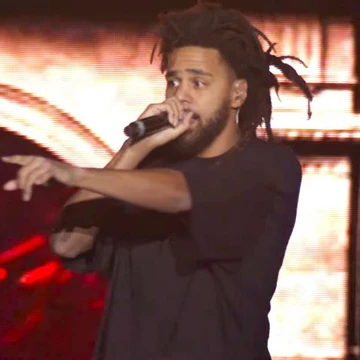
KOD Season 4 is the fourth installment of King of the Dot, the battle-rap competition series created and fronted by J. Cole out of Charlotte, North Carolina. By the time Season 4 rolled out, the show had already cemented itself as a cultural fixture in hip-hop, a weekly ritual where emerging and established MCs step into a charged arena to trade bars in front of a live crowd and a global online audience. This season carried the weight of a franchise that had grown from a local Charlotte spectacle into a must-watch event for rap fans worldwide. It represented a maturation of the format—sharper editing, more narrative tension between rounds, and a deeper sense that each battle was a chapter in a larger story about who belongs in the conversation. For the J. Cole universe, KOD is the living, breathing proof that the Dot still produces its own kings.
- Creator
- J. Cole
- Home base
- Charlotte, North Carolina
- Format
- Multi-round battle rap competition
- Genre
- Hip-hop / Battle rap
- Cultural role
- Flagship talent showcase for the Charlotte rap scene and beyond
- Season number
- 4th season of the KOD series
Lore & Background
By Season 4, KOD had evolved well beyond a simple rap-off. The show became a narrative engine: rappers were introduced with backstories, alliances formed and fractured between episodes, and the crowd in the Charlotte venue became a character in its own right, their energy shifting with every punchline and every stumble. J. Cole's presence as the show's face gave it a gravitas that purely competitive formats rarely achieve—he wasn't just a judge; he was the standard, the bar against which every bar was measured, and his occasional interjections carried the weight of a mentor watching a student step up. The cultural footprint of this season was amplified by the broader hip-hop landscape. In a moment when the genre was searching for its next wave of voices, KOD served as a proving ground that felt democratic yet curated. The battles weren't just about who could spit faster; they were about narrative, vulnerability, and the specific alchemy of turning pain into punchlines. Fans debated every round online, dissecting cadence, wordplay, and emotional resonance, turning each episode into a communal experience that stretched far beyond the initial watch. For the Charlotte community, KOD Season 4 reinforced the city's identity as a genuine hip-hop capital, not merely a participant in one. The show reminded everyone that the Dot was a place where the culture was made, not just consumed, and that the next great voice could be standing in the audience, waiting for their turn under the lights.
In Their Own Story
The air in the Charlotte venue tasted like cold beer and anticipation. Row after row of faces leaned forward, phones raised like torches, the crowd a single breathing organism. The MC called the next round with a voice roughened by three hours of commentary, and the lights narrowed to a single white circle on the stage. Two figures stepped in from opposite wings—one in a plain black tee, the other in a vintage jacket with the sleeves frayed. The first bars hit and the room inhaled. By the second verse, someone in the front row was on their feet, not from the words alone but from the way the rapper's jaw tightened, the way they let a beat of silence hang before the final line. The crowd erupted, a sound like a wave breaking against a seawall. In the corner, a producer with a headset nodded slowly, already thinking about the next round. This was the Dot. This was the church, the arena, the confessional, all at once. And the night was only halfway through.
Reader's Guide
Season 4 arrived when the world needed a ritual it could gather around. The format was familiar by now—rounds of head-to-head battles, a live Charlotte crowd, J. Cole anchoring the proceedings with the quiet authority of someone who built this from a parking lot and a dream. But this season felt different. The editing was tighter, the narrative arcs between episodes more deliberate, and the roster of competitors carried a mix of raw newcomers and seasoned veterans who had been circling the KOD stage for years. The energy in the venue was electric from the opening round. Each battle built on the last, the crowd's investment deepening as rivalries formed, as a rapper's personal story bled into their bars, as the stakes of the crown became tangible. J. Cole's commentary was sparse but loaded—he let the rappers speak, stepped in only when a moment needed framing, and his presence in the booth reminded everyone that this was his city, his standard, his stage. Culturally, Season 4 mattered because it proved KOD wasn't a novelty. It was infrastructure. A pipeline. A weekly reminder that hip-hop in Charlotte wasn't a scene that needed validating by the coasts—it was the source. The debates online after each episode, the clips that went viral, the rappers who emerged from the show and carried that momentum into their careers: all of it stitched KOD deeper into the fabric of the culture. For fans, it was the season where the show stopped being a show and started being a tradition.
Did You Know?
- KOD was created by J. Cole specifically to give the Charlotte, North Carolina hip-hop community a high-profile platform, and the show's identity remains deeply tied to that city.
- The show's format has evolved across its seasons, with changes to round structure, judging criteria, and narrative presentation, reflecting both audience feedback and the growth of the battle-rap genre.
- J. Cole's role on KOD is that of creator and face of the show rather than a traditional host, giving the series a tone of mentorship and cultural stewardship that distinguishes it from purely competitive formats.
- The live Charlotte crowd is a central element of the show's identity, with audience energy and reaction playing a significant role in the atmosphere of each battle.
More in Tours & Timeline
Elsewhere in the J Cole universe
Spotted an error? Know more?
This is a living reference — every entry is fact-audited, and reader corrections feed straight into our audit queue. Suggest an edit · See this site's audit record