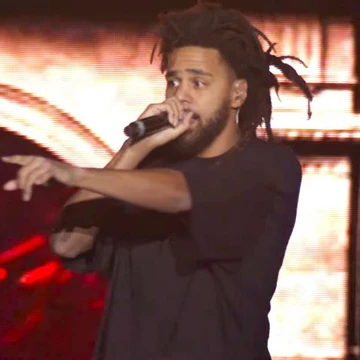
The 2014 Forest Hills Drive Tour
Three years of silence, one street in Fayetteville, and a tour that redefined what a rap concert could feel like.

The Forest Hills Drive Tour was the 2014 concert run that carried J. Cole's third studio album, Forest Hills Drive, from the studio into arenas, clubs, and festival stages across the United States. Coming off a period of personal reinvention and a deliberate step away from the mainstream hip-hop machine, Cole used this tour to present a body of work that blended introspective storytelling, political observation, and hard-hitting beats with an intimacy that felt almost conversational. For fans who had followed Cole since his early mixtapes and the Sunday Service albums, the tour represented a maturation: the same Fayetteville, North Carolina kid who rapped with raw urgency now commanded rooms with a reflective, almost cinematic command of space. The show was less about spectacle and more about narrative arc, and audiences responded with a devotion that would only deepen in the years that followed.
- Album supported
- Forest Hills Drive (2014)
- Artist
- J. Cole
- Record label
- Roc Nation
- Album number
- Third studio album
- Hometown / album namesake
- Fayetteville, North Carolina
- Tour year
- 2014
Lore & Background
Forest Hills Drive was not just a street in Fayetteville, North Carolina; it was the emotional coordinate from which Cole measured every ambition, every compromise, and every late-night doubt. The 2014 tour carried that coordinate into every city he hit, and the setlists reflected a deliberate arc: opening with the political fire of tracks like 'Power Trip,' moving through the vulnerability of 'Love .The Woman,' and landing on the reflective, almost elegiac weight of '4 Your Eyez Only.' The progression was not accidental. Cole treated each night like a short film with a three-act structure, and the crowd learned to read the pacing the way a theater audience reads a play. Culturally, the tour landed at a moment when hip-hop was fracturing between the hyper-commercial and the underground. Cole occupied a middle ground that was neither fully one nor the other: he was on Roc Nation, he was on major radio, yet the material still carried the DIY honesty of his South Carolina mixtape era. That tension made the live shows feel urgent. Audiences who had grown up with his early work recognized the continuity, while newer listeners encountered a performer who could shift from a whispered verse to a chest-thumping hook without losing the thread. The tour also deepened Cole's reputation as a performer who valued the room's energy over production tricks. No pyrotechnics, no elaborate staging. Just a microphone, a beat, and a man who could hold a crowd of ten thousand in the palm of his hand by talking to them like they were in a living room. That restraint became a signature, and the 2014 run is where it crystallized most clearly.
In Their Own Story
The house lights dimmed in a mid-sized arena somewhere in the Southeast, and for a moment the only sound was the low hum of the PA system and the collective exhale of a crowd that had been waiting. Then a single beat dropped—sparse, warm, almost like a late-night radio station bleeding through a bedroom window—and a figure in a black hoodie stepped to the mic. No introduction. No hype. Just a voice that started soft, almost apologetic, as if he were telling a story he was still not sure he had the right to tell. The crowd leaned in. By the second verse, the room was swaying in unison, not because the beat demanded it, but because the words had found the exact frequency of the people in the seats. When the final track ended and the silence held for three full seconds before the applause broke, it felt less like the end of a concert and more like the last page of a book you did not want to close.
Reader's Guide
Picture this: it is the summer of 2014, and the hip-hop landscape is split wide open. On one side, the commercial machine is churning out product at a pace that makes the genre feel like a conveyor belt. On the other, a young man from Fayetteville, North Carolina has just dropped his third album and is about to walk into arenas and prove that you do not need a three-minute hook to make ten thousand people forget the time. The Forest Hills Drive Tour is not a spectacle tour. There is no confetti cannon, no video wall cycling through a highlight reel. What there is is a man, a microphone, and a setlist that moves like a short film. He opens with the political heat of 'Power Trip,' and the room ignites. He pulls back for the vulnerability of 'Love .The Woman,' and the same room goes quiet, almost tender. He closes with the reflective weight of '4 Your Eyez Only,' and the silence after the last note is the loudest thing in the building. What made this run matter was the trust. Cole trusted the audience to follow a narrative arc in real time. He trusted the beats to breathe. He trusted that a whispered verse could hit harder than a shouted one. And the crowd, in turn, trusted him back. That mutual faith is the thing you cannot replicate in a studio, and it is the thing that made the 2014 tour feel less like a show and more like a shared, temporary home.
Did You Know?
- The album title 'Forest Hills Drive' is the name of a real street in Fayetteville, North Carolina, J. Cole's hometown, and the track '4 Your Eyez Only' was written as a direct letter to the people who had doubted his car
- Forest Hills Drive was Cole's third studio album, following Cole World: The Sideline Story (2009) and The Sunday Service: The Anthology Vol. 2 (2011), marking a deliberate two-year gap between projects.
- Cole was known during this era for keeping live shows relatively stripped back, prioritizing vocal delivery and beat integrity over elaborate staging, a philosophy that set his concerts apart from the production-heavy no
- The album and its supporting tour landed during a period when Cole was publicly navigating tensions with the broader hip-hop industry, and several tracks on the record addressed those conflicts directly.
More in Tours & Timeline
Elsewhere in the J Cole universe
Spotted an error? Know more?
This is a living reference — every entry is fact-audited, and reader corrections feed straight into our audit queue. Suggest an edit · See this site's audit record