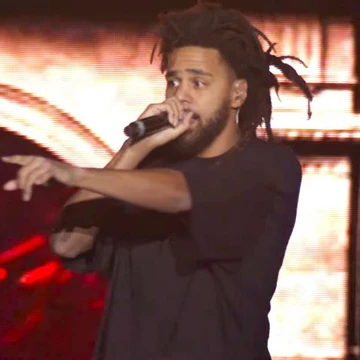
The 4/4 Tour
One artist, one message, and a world that finally showed up to listen.

The 4/4 Tour was J. Cole's ambitious 2014–2015 world concert run, built to carry the momentum of his breakthrough studio album *4 Your Eyez Only* into arenas and festival stages across North America and Europe. It marked a significant step up in production scale and geographic reach, transforming Cole from a critically adored recording artist into a commanding live performer in his own right. The tour's identity—its visual language, its setlist architecture, and the way Cole engaged crowds with spoken-word interludes between songs—became a touchstone for fans who experienced it firsthand and for those who would later study his live career. It sits at the crossroads of his independent-era credibility and his arrival on the global hip-hop stage.
- Artist
- J. Cole
- Album supported
- 4 Your Eyez Only (2013)
- Tour type
- World concert tour
- Approximate run
- Late 2014 – early 2015
- Regions covered
- North America, Europe
- Notable distinction
- First major multi-continent world tour in his catalog
Lore & Background
The 4/4 Tour grew directly out of the energy surrounding *4 Your Eyez Only*, an album that blended introspective lyricism with hard-hitting production and earned Cole a wider audience beyond his loyal independent following. The tour's name echoed the album's title, and its visual identity leaned into bold, clean typography and a palette of deep blues, golds, and stark white—giving the stage a cinematic, almost editorial feel that set it apart from the typical hip-hop concert aesthetic of the era. Live, Cole structured his sets to move between the album's more confrontational tracks and its tender, reflective ones, punctuating transitions with spoken-word segments where he addressed the audience directly about self-worth, authenticity, and the music industry's machinery. These interludes became a signature: not just banter, but a kind of live sermon that made arena crowds feel like they were sitting in a living room. The production team used a large central video screen to project abstract visuals and close-up footage, keeping the focus on Cole's delivery rather than pyrotechnics. For the fan community, the tour became a shared cultural moment. Social media filled with clips of specific crowd reactions, and the tour's setlist—mixing newer material with earlier tracks from *Cole World: The Sidelong Views* and his mixtape era—gave longtime fans a thread connecting his origins to his present. It cemented the idea that J. Cole's live show was not just a concert but a curated experience with a beginning, a middle, and a deliberate emotional arc.
In Their Own Story
The arena lights dimmed to a single amber glow, and the crowd—that restless, buzzing sea of thousands—settled into a hush you rarely hear in a hip-hop show. A low hum of bass rolled through the floor. Then a voice, unamplified at first, cutting through the silence like a blade through silk. No intro. No hype-man. Just a man in a plain jacket standing center stage, hands in his pockets, looking out at the dark with the quiet confidence of someone who has already said what he needed to say and is now choosing to say it louder. The screen behind him flickered to life with a slow, abstract pulse of gold and blue, and the first chord hit like a door closing. The room exhaled. And for the next hour and a half, nobody moved, nobody checked a phone, nobody left. They just listened. And when the last note faded and the lights came up, the applause didn't feel like applause. It felt like a thousand people setting something down they'd been carrying for a long time.
Reader's Guide
Picture the moment the doors open in a mid-sized European arena, the air thick with the smell of cold November outside and warm bodies inside. Cole's team has built a stage that looks less like a concert rig and more like a film set—clean lines, a massive central screen, minimal truss. The opening act wraps, the house lights dip, and a single spotlight finds him at the mic stand. No confetti. No dancers. Just a guy in a fitted jacket talking to you like you're one person in a bar. He works through the new material first, letting the heavier, more confrontational tracks land before easing into the reflective ones. The crowd sways, sings the hooks they've learned from the album, and then he pauses, steps back from the mic, and delivers a few minutes of unscripted thought about who you are when nobody's watching. The room goes still. That's the moment people will retell for years. He closes with an older track, one from the mixtape days, and the energy shifts from reverence to pure, unfiltered joy. Hands go up. Strangers grab strangers. The encore isn't a encore; it's a conversation. And when he finally walks off, the arena doesn't erupt. It sighs. Like it just exhaled something it didn't know it was holding. That's the 4/4 Tour in a nutshell: not a spectacle, but a séance. A room full of people doing something together that the industry keeps trying to sell to them in smaller, cheaper pieces.
Did You Know?
- The tour's visual identity deliberately moved away from the pyrotechnics-heavy hip-hop concert norm, favoring a cleaner, more cinematic stage design centered on a large video screen and restrained lighting.
- Cole's spoken-word interludes between songs—addressing themes of self-worth, industry pressure, and authenticity—became a defining feature of his live shows and a point of distinction from peers.
- The setlist wove together tracks from *4 Your Eyez Only* with earlier material from his independent-era albums and mixtapes, creating a narrative arc that connected his origins to his present for longtime fans.
- The tour's multi-continent scope marked a significant expansion of Cole's live footprint beyond the North American club and mid-size venue circuit he had dominated in earlier years.
More in Tours & Timeline
Elsewhere in the J Cole universe
Spotted an error? Know more?
This is a living reference — every entry is fact-audited, and reader corrections feed straight into our audit queue. Suggest an edit · See this site's audit record