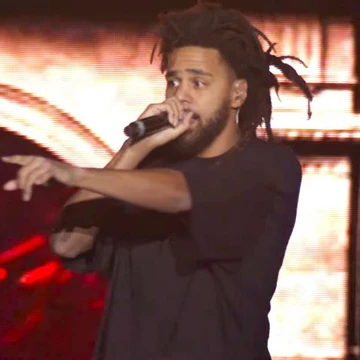
The 4/5 Tour
The night the mic became a confession booth and the arena held its breath.

The 4/5 Tour is the fan-recognized concert cycle that carried J. Cole through the mid-to-late 2016 period following the release of his second studio album, 4 Your Eyez Only. It marked a turning point in his live career: the moment he shifted from being a respected recording artist to a commanding, emotionally raw stage presence that audiences still reference years later. The tour's name—'4/5'—reflects its position between the fourth and fifth major creative chapters of his catalog, a transitional stretch where Cole was processing personal upheaval, industry friction, and his own artistic identity in real time. Fans remember it less for a polished spectacle and more for the unfiltered, almost confrontational honesty he brought to arenas and clubs alike.
- Artist
- J. Cole
- Album promoted
- 4 Your Eyez Only (2016)
- Tour type
- Solo headlining
- Primary region
- United States
- Cultural significance
- Solidified Cole's reputation as a live storyteller
Lore & Background
During this stretch of shows, Cole's setlists wove together the new material from 4 Your Eyez Only with select cuts from 2014 Forest Hills Drive, creating a narrative arc that moved from introspection to defiance. Audiences recall the way he would pause mid-song, drop the beat, and speak directly to the crowd—sometimes for minutes at a time—turning a concert into something closer to a group therapy session with a thousand people in the room. The emotional core of the tour was the album's preoccupation with authenticity, family, and the cost of success. Tracks dealing with his father's passing, his relationship with his son, and his frustration with the music industry hit differently in a live setting, stripped of production gloss. Fans in the front rows describe the silence that would fall over a venue when he started a particular verse, the way a stadium of twenty thousand could go quiet as a library. Culturally, the 4/5 Tour sits in the same lineage as other pivotal hip-hop live moments—where the artist stopped performing a persona and started performing a person. It set the template for how Cole would approach his later tours: fewer pyrotechnics, more eye contact, more vulnerability, and a setlist that felt like a diary read aloud to strangers who had become friends.
In Their Own Story
The house lights dim to a deep amber. Somewhere in the back, a phone camera shakes. Then the beat drops—low, chest-rattling, patient—and Cole walks out not in a flash of light but in a slow, deliberate stride, hoodie up, hands in his pockets. He doesn't say 'what's up.' He just nods, like he's greeting someone he already knows. The first song is the one about his dad. The crowd doesn't clap. They listen. When the last bar lands, he sets the mic on the stand, walks to the edge of the stage, and says, quiet enough that the FOH engineer has to boost it, 'You don't owe anyone your story.' A beat of silence. Then the room exhales. The next song is the one about the industry, and this time the crowd roars. He grins. He's not performing. He's telling you something he needed to say, and you just happened to be in the room.
Reader's Guide
Picture the arena at 9:47 p.m. The opener has just cleared the stage, and there's that electric half-second of silence before the house lights cut. Then the beat hits—slow, heavy, almost funereal—and Cole walks out in a hoodie, no pyrotechnics, no hype man. He just nods. The first song is the one about his father, and twenty thousand people go quiet in a way you don't see in sports. You see it in churches. You see it at memorials. That's the energy. By the third song, the setlist has shifted into the 2014 material, and the crowd is singing along, but Cole keeps pulling them back. He stops the beat. He talks. Not a monologue—something messier, more honest. He's processing something in real time, and the room feels it. That's the 4/5 Tour in a sentence. The cultural weight? This is where the 'storyteller' label stopped being a marketing tag and became a live-performance identity. You could hear it in how the next generation of hip-hop artists approached their own shows: less spectacle, more silence, more 'I'm telling you something I needed to say.' The 4/5 Tour didn't just promote an album. It reset expectations for what a rapper could do with a microphone and a room full of strangers.
Did You Know?
- The 4 Your Eyez Only era was notable for Cole addressing his personal life—fatherhood, grief, and industry frustrations—directly in his music, which translated into a distinctly intimate live atmosphere during the tour.
- Cole is widely noted by fans and critics for his habit of pausing mid-set to speak candidly to the audience, a practice that became a signature of his live shows during this period.
- The tour cycle helped cement the 'storyteller' reputation that would define his subsequent live performances and influence a generation of hip-hop artists who prioritized lyrical narrative over spectacle.
- 4 Your Eyez Only was Cole's second studio album and marked a deliberate shift toward more personal, confessional songwriting compared to his debut, 2014 Forest Hills Drive.
More in Tours & Timeline
Elsewhere in the J Cole universe
Spotted an error? Know more?
This is a living reference — every entry is fact-audited, and reader corrections feed straight into our audit queue. Suggest an edit · See this site's audit record