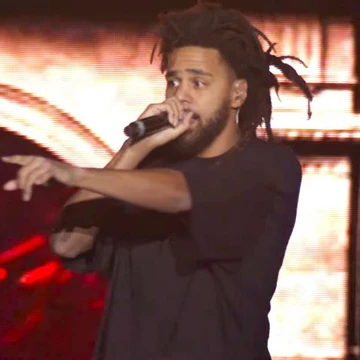
The Off-Season Tour
The quietest album got the loudest room—J. Cole brought the Off-Season to life, one honest verse at a time.

The Off-Season Tour is the concert cycle that carried J. Cole's fifth studio album, *The Off-Season*, from the studio into arenas and theaters across North America. Released in 2021 after a stretch of relative silence, the album marked a shift toward introspection—fatherhood, creative doubt, the weight of expectation—and the tour became the live space where those themes landed in front of thousands of fans at once. Rather than a high-octane spectacle, the tour leaned into storytelling, long spoken-word interludes, and stripped-back acoustic moments that let the lyrics breathe. For a fanbase that had followed Cole since the 2009 *The Coming American* mixtape era, the Off-Season runs felt like a reunion: a rapper who had stepped back from the spotlight stepping back in, not to prove anything, but to talk.
- Artist
- J. Cole (Jermaine Lamarr Cole)
- Album supported
- The Off-Season
- Album release year
- 2021
- Tour type
- Solo concert tour (arena & theater scale)
- Notable collaborators on tour
- Bobby Shmurda, 21 Savage (select dates)
- Cultural context
- Post-pandemic return to large-scale live performance
Lore & Background
The Off-Season album arrived in a music landscape that had grown louder, faster, and more fragmented. Cole's decision to title the record after a sports metaphor—the period between seasons when athletes train, recover, and question whether they still want the game—resonated with fans who had watched him navigate fatherhood, business ventures, and the slow erosion of the hip-hop narrative he'd helped build in the 2010s. Tracks like the title song and the extended spoken-word passages positioned the album less as a collection of singles and more as a monologue. The tour translated that monologue into a shared experience. Cole's stage design favored minimalism: a single spotlight, a grand piano in some configurations, a small band, and long stretches where he simply talked between songs. Fans reported that the shows felt closer to open-mic nights in a giant cathedral than to the production-heavy spectacles that dominated hip-hop touring. The energy was warm, communal, and often emotional—audiences singing along to lines they'd memorized over months of streaming. Culturally, the Off-Season Tour slot into a broader pattern in Cole's career: he tours in bursts, disappears, and returns with something that feels like a chapter rather than a product. For the 4/4 community, the tour was a reminder that the artist who once rapped about being the 'only one in the building' was still in the building, just on a different floor.
In Their Own Story
The house lights dimmed to a low amber. No pyro, no LED wall cycling through album art. Just Cole at the mic stand, a pair of headphones around his neck, a half-smile like he was about to tell a joke to a friend. The arena hummed with that particular hush you get when two thousand people realize they're about to hear something personal. He didn't drop a beat. He didn't count in. He just started talking—about a Tuesday morning, about a kid's drawing taped to the fridge, about the weird silence of a studio at 2 a.m. when the beat you made three years ago suddenly sounds like someone else's. The crowd didn't clap. They listened. And somewhere in the middle of that monologue, a single voice started humming the melody, then ten, then a thousand, and the whole room became one long, breathing chorus. That was the Off-Season. Not a show. A conversation that happened to be in a big building.
Reader's Guide
Chapter One: The Comeback. After a stretch where Cole was more visible on business podcasts and fatherhood interviews than on the radio, *The Off-Season* dropped in 2021 like a letter you didn't expect. The album's pacing—slow-burn verses, long interludes, a refusal to chase the 90-second single—set the tone for everything that followed on the road. Chapter Two: The Room. When the tour hit theaters and mid-size arenas, the intimacy was the point. Cole's setlists leaned heavily on the new material but wove in older staples, letting fans hear the through-line from Forest Hills to the present. The spoken-word bridges between songs became the show's spine; in several cities, audiences recorded those moments and shared them as clip-length sermons. The energy wasn't a mosh pit. It was a congregation. Chapter Three: The Bigger Stages. As the run expanded to arena dates, Cole added a small live band and, on select nights, brought out collaborators. The contrast between the stripped acoustic passages and the fuller production on the bigger tracks created a dynamic arc—quiet to loud, personal to anthemic. Fans who'd been in the 4/4 community since the early mixtape days described the experience as 'hearing the whole story in one night.'
Chapter Four: The Aftermath. The tour didn't end with a stadium closer. It ended the way it started: a single mic, a single voice, a thank-you that sounded more like a confession. For the culture, the Off-Season Tour reaffirmed that Cole's live shows were never about spectacle. They were about the space between the bars, the breath before the next verse, the feeling that the person on stage was talking to you specifically, in a room full of strangers who all happened to be listening.
Did You Know?
- The Off-Season album's title is a sports metaphor referring to the training-and-recovery period between competitive seasons, a concept Cole has referenced in interviews about taking creative breaks.
- J. Cole is known for touring in concentrated bursts rather than year-round circuits, which makes each run feel like a limited-edition event for fans.
- The Off-Season era followed a period where Cole was more publicly visible as a business owner and podcaster than as a charting artist, making the return to the stage feel like a deliberate re-entry.
- Cole has long favored minimal stage production—often just a mic, a small band, and spoken-word interludes—contrasting sharply with the LED-heavy, pyro-driven shows common in hip-hop touring.
More in Tours & Timeline
Elsewhere in the J Cole universe
Spotted an error? Know more?
This is a living reference — every entry is fact-audited, and reader corrections feed straight into our audit queue. Suggest an edit · See this site's audit record