4 Your 2z
A father's lullaby written for the world, sung in a voice that finally stopped performing.

4 Your 2z is the fan-recognized shorthand for the *4 Your Eyez Only* era in J. Cole's artistic timeline — the fourth studio album and its supporting tour cycle, released in 2016. In the broader narrative of Cole's discography, it marks the chapter where the young father of Forest Hills Drive steps back from the spotlight's noise and turns the lens inward, writing songs addressed directly to his newborn son and, by extension, to every listener who has ever needed permission to be vulnerable. Within the J. Cole universe, this entry sits between the high-octane storytelling of *2014 Forest Hills Drive* and the later, more expansive world of *KOD* and *The Off-Season*. It is the quiet, intimate middle act: a record built almost entirely in his own hands, stripped of the collaborative spectacle that defined his earlier work, and anchored by a tour that felt less like a concert and more like a living-room conversation scaled to arenas.
- Subject
- 4 Your Eyez Only (album & tour cycle)
- Artist
- J. Cole
- Album number
- 4th studio album
- Release year
- 2016
- Label
- Columbia Records
- Production note
- Largely self-produced by J. Cole
- Signature tracks
- 4 Your Eyez, Love Yourz, No Role Modelz, Be Free
Lore & Background
In the mythology fans have built around Cole's career, 4 Your 2z is the album where the mask comes off. After the dense, multi-character storytelling of his previous record, Cole chose to write in a more direct, second-person voice — addressing his son, his listeners, and his own doubts. The recurring "z" suffix in track titles (No Role Modelz, Wet Dreamz, 4 Your Eyez) became a small stylistic signature, a way of softening the edges of otherwise heavy topics and making them feel like spoken confessions rather than declarations. The production philosophy shifted too. Where earlier albums leaned on a rotating cast of producers, 4 Your 2z was assembled largely by Cole himself in his home studio, giving the record a cohesive, almost lo-fi warmth. The beats breathe. The vocal delivery is closer, more conversational. Fans often describe the listening experience as sitting across from a friend who finally decided to stop performing and just talk. The tour that followed carried that intimacy into live spaces. Setlists leaned heavily on the new material, and Cole was known to talk between songs, share stories about fatherhood, and let the crowd sing the hooks back to him. It was a different energy from his earlier shows — less pyrotechnic, more communal — and it cemented the idea that J. Cole's live performances were as much about connection as they were about spectacle.
In Their Own Story
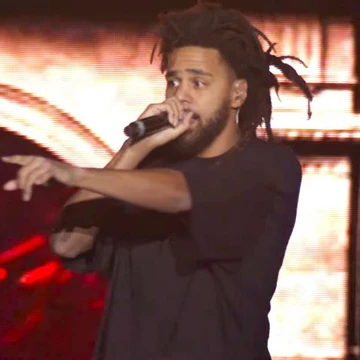
The stage lights are dimmed to a warm amber. No confetti cannons. No dancers. Just Cole at the mic, a single spotlight catching the edge of his hoodie, and the low hum of a piano loop bleeding through the monitors. He pauses. The arena — three thousand people, maybe more — goes silent in that particular way that only happens when someone you trust is about to say something true. He tilts his head, almost smiling, and says, "This next one's for the little guys. The ones who think they gotta be somebody else to be enough." The first chord of the next track rolls out slow, unhurried, and somewhere in the third row a kid is pressing his phone against his chest like it's a prayer. The crowd sways. Nobody is jumping. Everybody is listening. That's the whole point.
Reader's Guide
Picture the timeline like a road trip. You've just come off the long, winding stretch of *2014 Forest Hills Drive* — all those characters, all those stories, the feeling of a novel you can't put down. And then, 4 Your 2z pulls you into a small town. One street. One house. One kid in the crib upstairs. The album drops in the summer of 2016, and the cultural conversation shifts. Critics who had been tracking Cole's growth as a storyteller now hear something rarer: a man talking to his child. "4 Your Eyez" opens the record like a letter read aloud. "Love Yourz" is the gentle, aching middle chapter. "No Role Modelz" hits like a door closing on a version of himself he's ready to leave behind. The production is sparse, almost skeletal, letting the voice carry the weight. On the road, the energy is different. Cole talks between songs. He tells stories about sleepless nights, about the pressure of being a father in public. The crowd doesn't just cheer; they hum. They finish his lines. It feels less like a show and more like a group therapy session with a really good beat. By the final song, the arena is singing back, and Cole is just nodding, letting them have it. This is the chapter where the culture remembered that the most powerful thing an artist can do is stop performing and start being.
Did You Know?
- The "z" suffix in track titles like No Role Modelz and Wet Dreamz became a small but recognizable stylistic fingerprint of this era, softening heavy themes into something that feels more spoken than sung.
- 4 Your Eyez Only was largely self-produced by J. Cole, marking a deliberate shift away from the rotating producer teams of his earlier records and giving the album a cohesive, intimate sound.
- The album arrived in the same year Cole became a father, and the second-person, father-to-son framing of several tracks made it one of the most personally direct records in his catalog.
- The live shows supporting this era were noted by fans for their conversational tone — Cole frequently paused the set to talk, share stories, and let the audience carry the vocal hooks.
More in Tours & Timeline
Elsewhere in the J Cole universe
Spotted an error? Know more?
This is a living reference — every entry is fact-audited, and reader corrections feed straight into our audit queue. Suggest an edit · See this site's audit record