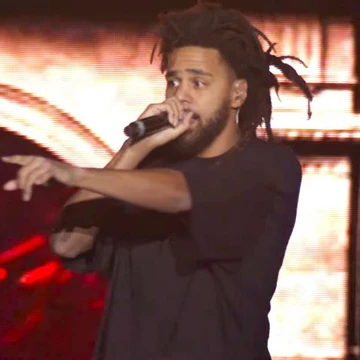
The Dollar & A Dream tour stops
One dollar, one mic, one unforgettable night.

The Dollar & A Dream tour stops represent the grassroots foundation of J. Cole's rise as a live performer. These intimate, low-cost shows were designed to connect directly with fans, bypassing the traditional concert industry's high ticket prices and corporate barriers. Each stop was a deliberate act of rebellion against the commodification of hip-hop, offering a raw, unfiltered experience that mirrored the hunger and authenticity of Cole's early mixtape era.
- Role
- Intimate concert series promoting accessibility and fan connection
- Affiliation
- J. Cole's early career and Dreamville Records ethos
- First appears
- 2013-2014 era, during the rollout of 'Born Sinner' and '2014 Forest Hills Drive'
- Status
- Concluded as a distinct tour concept, but its spirit lives on in later fan-focused initiatives
Lore & Background
The Dollar & A Dream tour stops were more than just concerts—they were a statement. J. Cole, having experienced the struggle of broke college students and aspiring artists, wanted to ensure that financial barriers never kept real fans from seeing him perform. Tickets were sold for a single dollar, a price point that was almost unheard of for a rapper of his growing stature. The shows were held in small venues, often clubs or theaters, creating an electric intimacy where Cole could feed off the energy of a crowd that was there purely for the love of the music. These stops became legendary among fans for their unpredictability and raw energy. Cole would often perform deep cuts from his mixtapes alongside hits, freestyle, and interact with the crowd in ways that larger arena shows couldn't replicate. The tour was a direct challenge to the industry's profit-driven model, proving that an artist could build a sustainable career on genuine connection rather than inflated ticket prices. It was a middle finger to scalpers and a hug to the day-one supporters. The Dollar & A Dream philosophy also extended to Cole's broader brand, influencing his surprise album drops and the Dreamville Festival's affordable pricing. For fans, attending one of these stops was a rite of passage—a chance to see a future legend in a room where the only thing that mattered was the music and the moment.
In Their Own Story
The room was a sweatbox, packed shoulder to shoulder with bodies that had paid exactly one dollar to be there. The air was thick with anticipation and the smell of cheap cologne. On stage, a single microphone stand and a stool. No backing dancers, no pyro, no smoke machines. Just a man in a hoodie, a pair of headphones, and a story to tell. When J. Cole walked out, the roof nearly blew off. He didn't say a word for the first minute, just stood there, soaking in the roar. Then, he started rapping 'Return of Simba' acapella, his voice cutting through the noise like a blade. The crowd rapped every word back at him, a call and response that felt less like a concert and more like a revival. For ninety minutes, there was no outside world—only the music, the sweat, and the shared dream. At one stop in Atlanta, a fan in the front row held up a handwritten sign that read, 'I skipped rent for this.' Cole saw it, paused mid-verse, and said, 'That's love. But don't do that again.' Then he launched into 'Lost Ones,' and the room went silent, every pair of eyes locked on the man who had turned a dollar into a memory.
Reader's Guide
The Dollar & A Dream tour stops are a cornerstone of J. Cole's lore, representing his commitment to accessibility and fan-first artistry. These were not just shows; they were a cultural statement that challenged the inflated economics of the concert industry. In the story of J. Cole's career, these stops serve as the bridge between his mixtape days and his arena-headlining status. They allowed him to cultivate a fiercely loyal fanbase that felt personally invested in his success. The tour's low price point made it a viral sensation, generating word-of-mouth buzz that traditional marketing couldn't buy. Why it matters: The Dollar & A Dream stops encapsulate the core values of Dreamville—community, authenticity, and rebellion against corporate gatekeeping. They are a reminder that for Cole, the music has always been about the people, not the profit. Fans who attended these shows often describe them as life-changing, a testament to the power of art when stripped of all pretense.
Did You Know?
- Tickets were sold for exactly one dollar, often with a limit of two per person to prevent scalping.
- The tour was announced with little to no advance notice, relying on social media and word of mouth to fill venues.
- Some stops featured surprise guest appearances from other Dreamville artists, adding to the intimate, family-like atmosphere.
- The concept was inspired by J. Cole's own experiences as a broke college student who couldn't afford to see his favorite rappers live.
More in World & Setting
Elsewhere in the J Cole universe
Spotted an error? Know more?
This is a living reference — every entry is fact-audited, and reader corrections feed straight into our audit queue. Suggest an edit · See this site's audit record